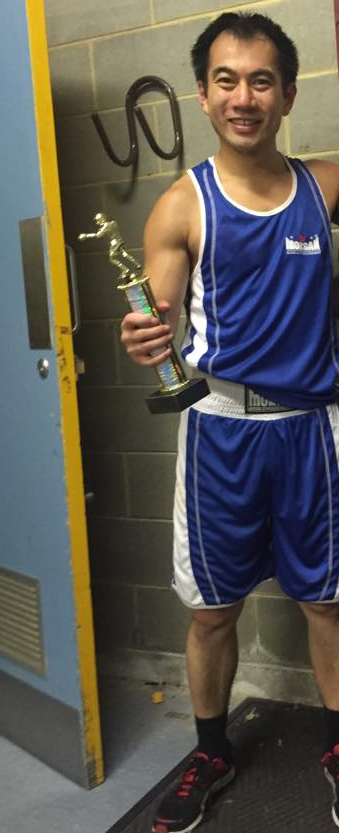
This is a qigong rehab exercise that I usually teach to clients with wrist or elbow problems. It is best done standing with feet about shoulder width apart and the knees bent, but it can also be done sitting. Relax the shoulders and draw your hands towards the chest with your palms facing you while breathing in and drawing the shoulder blades together gently. Then breathe out, let go of the shoulder blades, and extend the arms with the palms facing forwards and without forcing the movement, imagine pushing something heavy a long way away. Repeat as many times as you have time to do, 30 is a good number.
low FODMAP diets aren’t forever

Most IBS sufferers would have heard of the low FODMAP diet. Many would have tried it. [Read more…]
Migraine prevention

Acupuncture has been shown to prevent migraines.
A Cochrane review of the effectiveness of acupuncture treatment at preventing migraines found that the evidence suggests that a course of treatments can be a valuable option for people with migraines, and that it may be at least as effective as prophylactic drugs.
A more recent meta-analysis found that compared to conventional medication acupuncture was associated with greater reduction in frequency, duration, and intensity of migraines.
It is especially helpful for people whose migraines are associated with neck tension, or that are affected by their monthly cycle. Herbs help them too.
cupping and guasha workshop

Learn how to keep your friends and yourself healthy with cupping and guasha. Next Monday, January 23, I’ll be down at the Work-Shop in Fitzroy giving a introduction to these Chinese Medicine therapies. It’s folk medicine folks, everyone can do it.
mandarin peel chicken
I cooked mandarin peel chicken this week, so now I have an excuse to talk about mandarin peel, 陈皮 chen pi, as a medicinal. It improves digestion and stops metabolic activity from getting stuck. It also relieves some of the consequences of poor digestion, such as what we call dampness. This is a when things are wetter than they should be and can manifest as bloating, feeling full, poor appetite, or loose stools.Chicken cooked with chen pi is delicious – the peel has a slight bitterness that prevents the sweetness from being cloying. The nourishing warming chicken together with moving, damp clearing chen pi strengthens the whole body.
Most Chinese supermarkets sell chen pi, or you can dry your own. I was lucky enough to get some that had been aged for ten years by Richard of Loving Earth that really made this meal special.
This is the recipe I worked with, but I used rice wine instead of wine rice.
http://www.grouprecipes.com/…/szechuan-tangerine-peel-chick…
christmas baubles
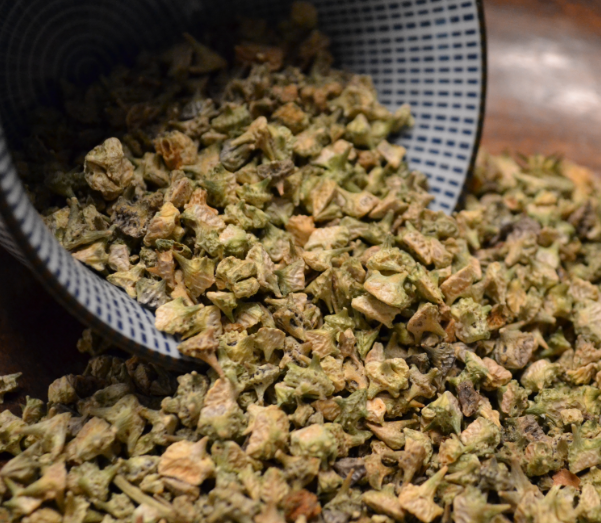
The fruit looks enough like Christmas baubles to make this timely. And the liquid amber fruit near my house is fruiting. We use liquid amber fruit or lu lu tong 路路通 to relieve pain and regulate menstruation. It is particularly good for breast pain and can help free up the flow of breast milk. It is used with star jasmine vine in Nanjing to relieve the pain of herpes zoster. And it’ll look good hanging from the Christmas tree, glittered up a little perhaps.
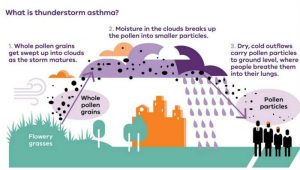
thunderstorm asthma

It was a bad week for asthma sufferers in Melbourne, and also for some that were susceptible to airborne allergens but who had never had an asthma attack before. A heads up to hayfever sufferers: if you’re allergic to pollen enough of it could potentially cause an asthma attack.
Studies have shown that Chinese medicine treatment with acupuncture, herbs, and moxibustion can reduce the frequency and intensity of asthma attacks, and reduce the need for both preventative and symptom relieving medication (eg 1, 2). Other studies show how Chinese medicine treatment regulates the immune system in ways that confirm that it can treat asthma. (eg 3.)
There’s an article here on conventional approaches ways to prepare for thunderstorm asthma:
- Jobst, K.A. (1995). A Critical Analysis of Acupuncture in Pulmonary Disease: Efficacy and Safety of the Acupuncture Needle. The Journal of Alternative and Complementary Medicine, 1(1), pp.57–85.
- Su, L., Meng, L., Chen, R., Wu, W., Peng, B. and Man, L. (2016). Acupoint Application for Asthma Therapy in Adults: A Systematic Review and Meta-Analysis of Randomized Controlled Trials. Complementary Medicine Research, [online] 23(1), pp.16–21. [Accessed 2 Aug. 2020].
- Li, J., Zhang, F. and Li, J. (2015). The Immunoregulatory Effects of Traditional Chinese Medicine on Treatment of Asthma or Asthmatic Inflammation. The American Journal of Chinese Medicine, 43(06), pp.1059–1081.

Michael Phelps’ cupping marks
Michael Phelps shows off his cupping marks. We Chinese medicine practitioners use cups to treat muscle tightness and pain, and pathogenic illness. It can be very effective alone, and can work even better when combined with acupuncture.
From our point of view the cups draw bad stuff out from deeper layers to the surface, whether it’s blood that has thickened because its flow has been restricted in a tight muscle, or external pathogenic factors that are associated with colds and flus. This explanatory model is common to traditional cupping practices throughout Asia, Europe, and Africa. A possible bio-medical explanation of how cupping helps with muscle tightness and pain is that it encourages phagocytosis to remove partially clotted blood. In his article “A Cupping Mark is not a Bruise”, cupping guru Bruce Bentley reports that a tissue sample taken from an athlete that had been cupped at the Australian Institute of Sport, was analysed as containing “old blood” (http://www.healthtraditions.com.au/uploads/212-cupping-proof.pdf).
I love doing cupping treatments. Not only do they work really well but they turn people into walking advertisements for Chinese Medicine. Not many of my patients expose their marks to as many people as Mr Phelps has though, nice one Michael.
natural food medicine
Natural food is medicine. In herbal medicine food herbs are the ones that can be used for general well-being. Mountain yam is one.
Chinese medicine isn’t big on unnecessary supplementation. It doesn’t create superfoods that are held out to be universal panaceas, and then encourage indiscriminate consumption of them. Instead it is well known that people who naively take a lot of strong tonics such as ginseng, reishi mushroom, or horny goat weed often harm themselves and need professional treatment. However there are medicinals that are classed as food herbs because their effects are gentle, and these are traditionally consumed as part of a balanced diet. They are used moderately though, and just as some foods are not the best for some people, they are sometimes inappropriate additions to some peoples’ diets.
My favourite is mountain yam or shan yao. When I was living in Japan I used to cook fresh mountain yam with chicken or pork. It’s delicious so I was eating it before I knew it was a herbal medicinal. The school Judo coach advocated eating it for strength and stamina, and as it is a food rather than a medicinal supplement there is nothing wrong with his advice.
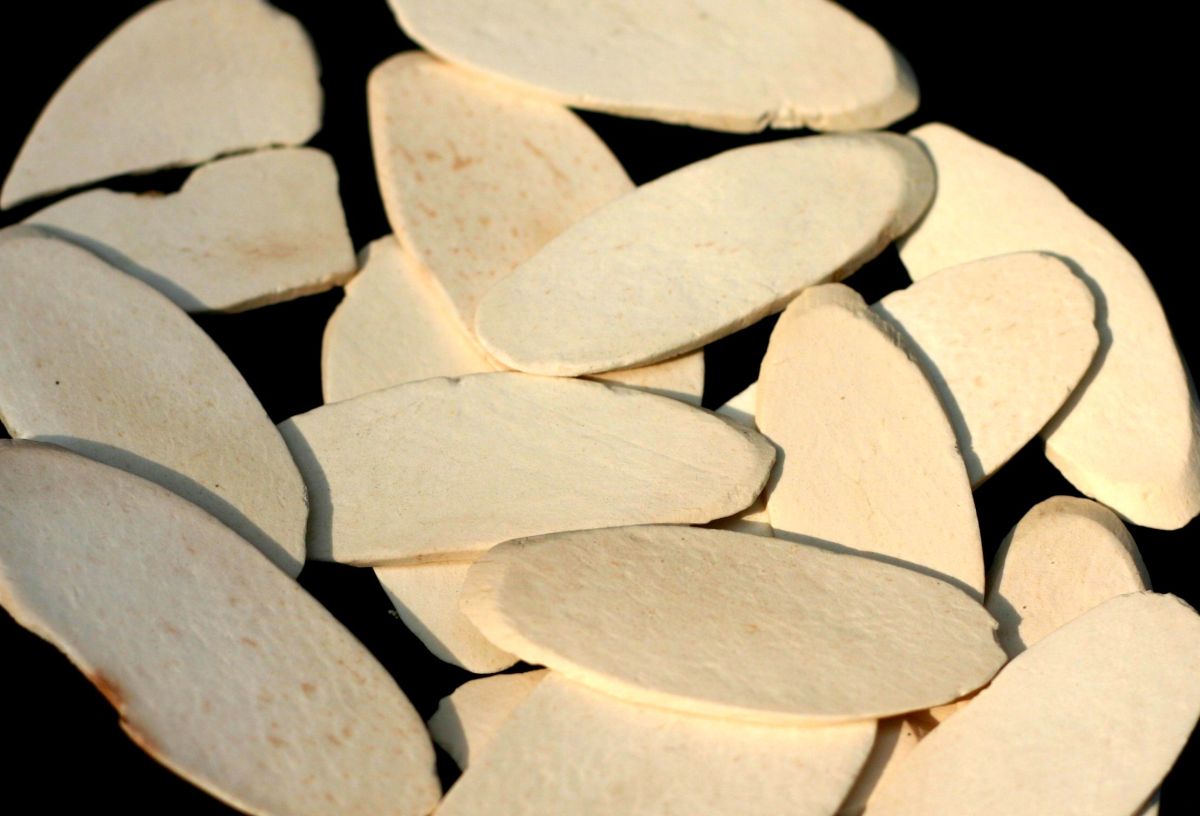
Shan yao improves digestion and respiration, and supplements the deep reserves of endurance or resilience. It strengthens the back and knees, and improves reproductive health. As it moistens as well as strengthens it is more balanced than some tonic medicinals that are warm and drying, and is thermally neutral so won’t upset those who tend to get a bit too hot or cold. It is particularly appropriate for those whose digestion or respiration is a bit weak and tend to have loose stools or chronic breathing difficulties. It also limits pathological fluid emissions such as excessive sweating or urination. So while it is a healthy addition to most people’s diets, it is not appropriate for those who have something that they need to sweat out so people with colds, acute respiratory conditions, or excessive urination because of heat or infection shouldn’t eat too much of it.
The dried yam can be rehydrated and added to soups or stews. Sometimes I just grind it up and cook it with rice. Next weekend I’ll head out to the Footscray markets to see if I can find some fresh shan yao.
bindi for health
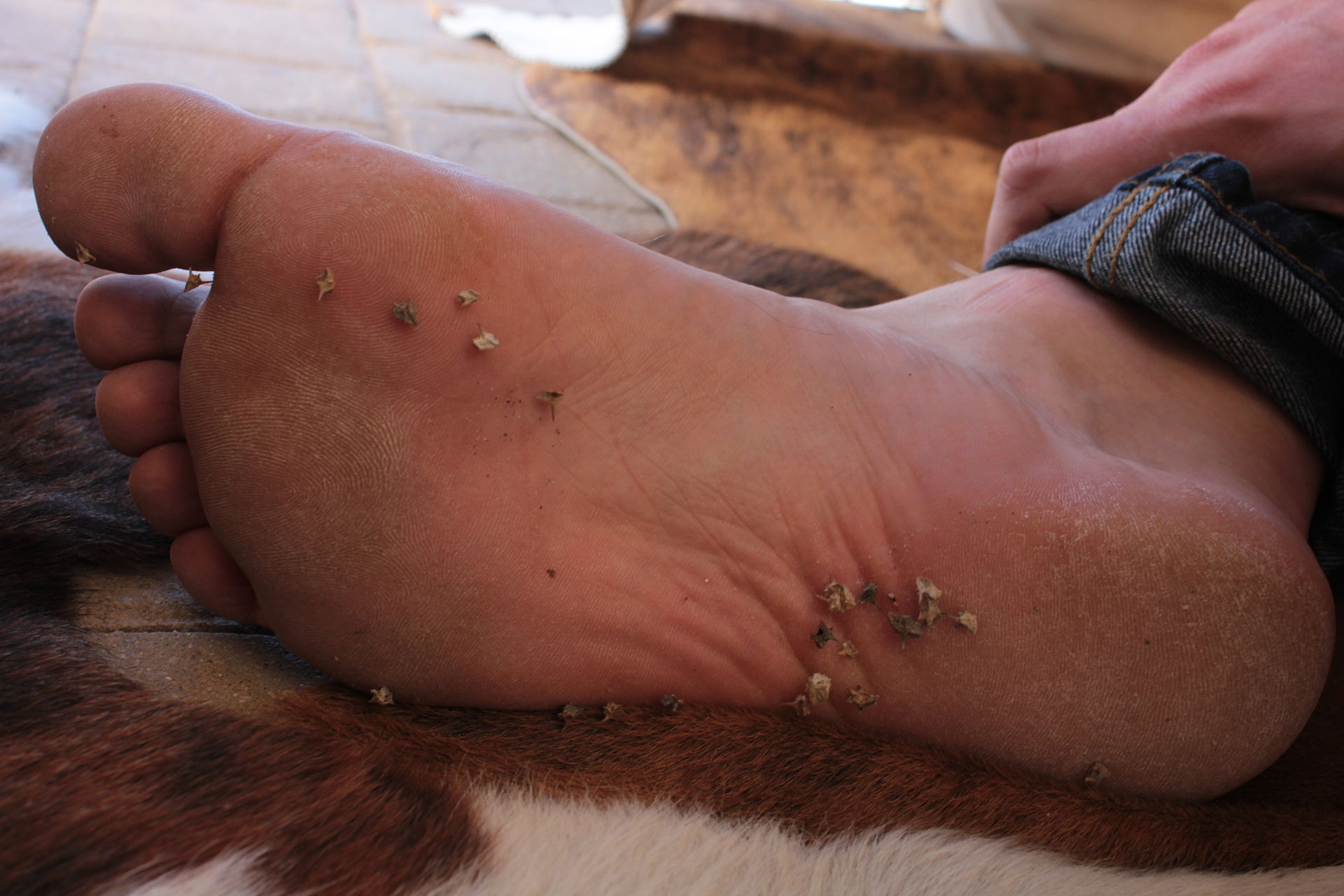
When I first started studying Chinese Medicine a weight-training Chiropractic student asked me about the effect of tribulus terrestis supplements on testosterone production. While I knew that it had been claimed to increase levels of endogenous testosterone, and that it was said that Eastern European strength athletes were dedicated users, I had to tell him that the scientific literature didn’t support such a claim, and that its Chinese Medicine properties did not suggest that it would have that kind of biological effect.
While I no longer have access to the academic databases that I had at University, a quick google scholar search suggests that there is still not the kind of evidence that is demanded of a biological agent’s effectiveness:
http://www.tandfonline.com/doi/abs/10.3109/19390211.2014.887602
Some years before I had asked an experienced Chinese doctor, the redoubtable Phillip Chu, about using tribulus as a supplement. He had a way of asking, “Why?” that suggested the question was foolish, and told me to trust the nutitrion of healthy foods. I’ll discuss this a bit more some other time.
However I was recently told that a major pharmaceutical company was planning to market a tribulus extract to improve male sexual function and fertility. Again I do not have good academic search capabilities these days, but I did find a review that concluded that evidence is emerging that tribulus may have aphrodisiac effects without affecting testosterone levels, but couldn’t find meta-analysis of effects on indicators of reproductive health such as sperm counts and motility. Presumably the pharmaceutical company has conducted its own trials to support its marketing.
There is something interesting to this from a Chinese Medicine perspective. While there are popular patent medicines sold to improve male reproductive health that have effects that could correspond to boosting androgen levels, most Western males who consult a Chinese Medicine practitioner to improve their reproductive health are treated with medicinals and acupuncture protocols that cool, calm, moisten, and move stagnation and blockages associated with emotional constraint.
Tribulus, or 白蒺藜 (bai ji li) is a medicinal that moves stagnation and blockages associated with emotional constraint, it also has a calming effect that relieves sensations like blood rushing to the head with anger. So is this where I conclude that Chinese Medicine always knew that tribulus was good for male reproductive health? Well, no. Interestingly, despite it having properties that would make it appropriate it is not often used for this, as it is not part of the more standard combinations of medicinals that cool, calm, moisten, and move. However the famous doctor Qin Bo-Wei did incorporate it in his standard formula for moving stagnation.
Where does this leave us. Reductionist medicine is beginning to establish that tribulus’ reputation as an aphrodisiac may be merited. A pharmaceutical company will market a tribulus extract supplement to improve male reproductive health that would seem to be based more on its reputation than the available evidence. The Chinese Medicine properties of tribulus make it appropriate for helping many Western males but while it could be used other medicinals with similar properties are prescribed more often.
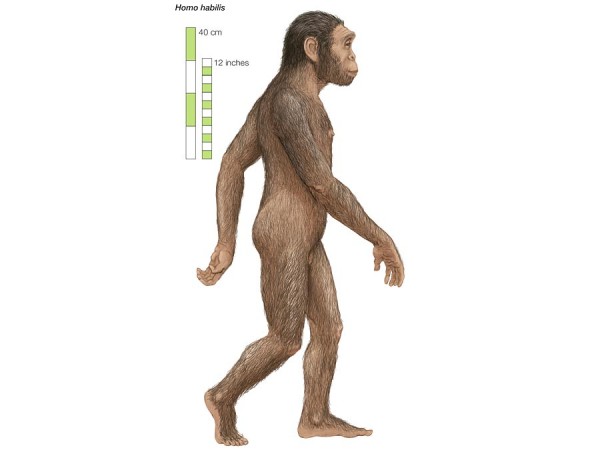
Perhaps there’s a cultural aspect that could make things a little clearer. The medicinals that are traditionally used in China to enhance male sexual function are tonics that have effects that could be seen to correspond to the manifestations of higher androgen levels. But these are inappropriate for most westerners and even for a number of modern Chinese for whom treatments containing medicinals with similar properties to tribulus are better. The aphrodisiac reputation of tribulus is part of the Indian herbal tradition, and could have been transported to the west. In the modern west increased sexual performance is associated with higher androgen levels so it was thought that tribulus must boost testosterone production, but now it appears that isn’t how it works. Maybe it’s by a biological action analogous to moving, unblocking, and easing emotional constraint that tribulus has it’s aphrodisiac effects on westerners and that Chinese Medicine told you so all along.
- « Previous Page
- 1
- …
- 4
- 5
- 6
- 7
- Next Page »